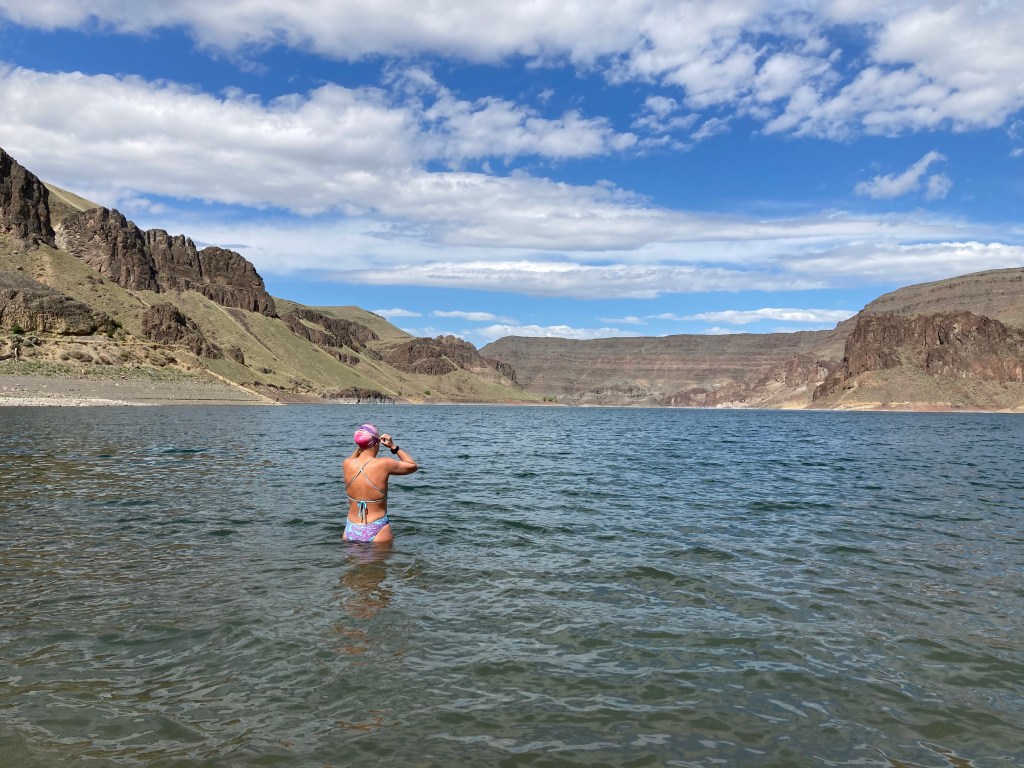
“What’s your goal on your next swim?”
- “I’d just like to finish!”
- “I’d like to finish under ten hours.”
- “I’d like to place in the top three.”
These are examples of outcome goals: the thing you hope to have achieved when the swim is over.
It’s good to have an end to journey toward, but it’s the journey that matters, in the end— anonymous, from a quote book my parents gave me when I was twelve.
Outcome goals are important— they can generate drive, motivation and direction. However, a series of achievements doesn’t necessarily make a fulfilled or happy athlete. In order to have a long career and positive experience with this sport, it’s best to get clear on what you would like to be doing along the way to your achievements.
“What do you want to do during this swim?”
- “I want to focus on good stroke technique.”
- “I want to stay willing to be uncomfortable/cold/tired”
- “I want to say please and thank you to my crew on every feed.”
- “I want to practice disengaging from unhelpful thoughts.”
- “I want to appreciate and savor every moment I can”.
Or for the more competitively inclined swimmer, with an outcome goal of winning or setting a record:
- I want to stay focused and engaged in the race no matter what happens
- I want to remain flexible and resilient in response to problems that arise
- I want to purposefully think encouraging and supportive thoughts that push me to give 100% despite the desire to back off
- I want to “swim my own race” and not get distracted if someone takes it out faster than expected
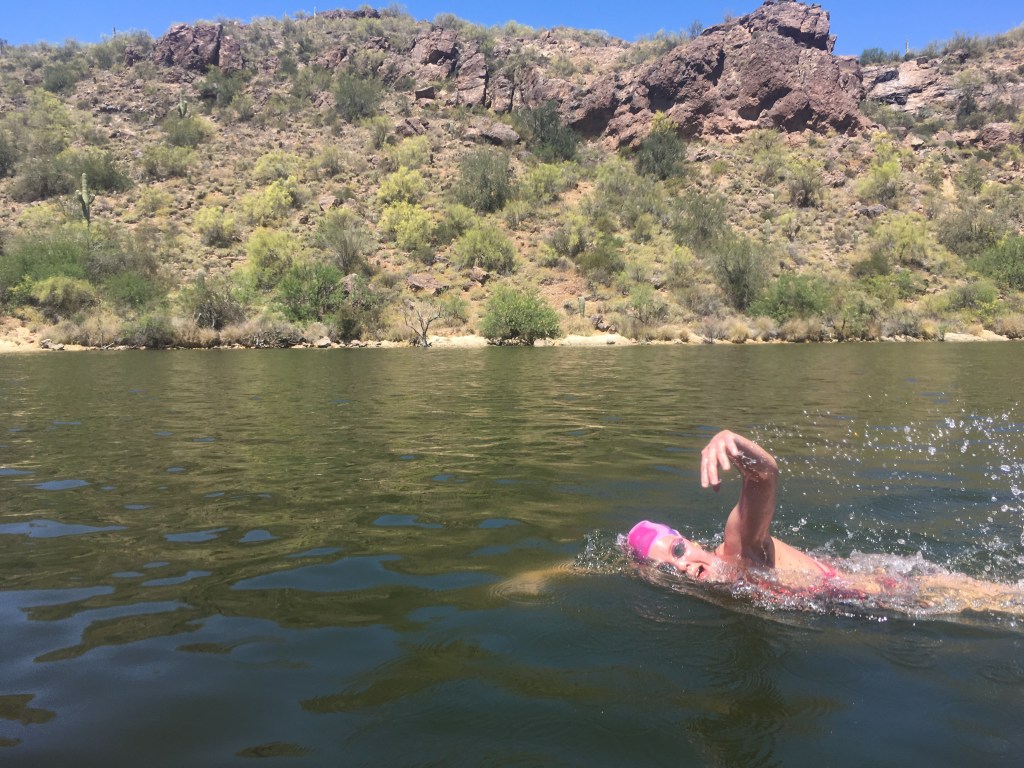
These are some examples of process goals that swimmers have set for themselves to work on throughout the entire swim, regardless of outcome.
Both types of goals are important, but process goals are often neglected. The advantages to process goals are:
- They are 100% under your control.
- They match with what makes the sport most meaningful to you.
- Focusing on them will make you a better athlete after every single swim, regardless of your performance stats.
- You’re more likely to perform well if you focus your attention on your approach than if you focus on the outcome.
To set a process goal, consider what you like most about swimming long distances, what you have valued most during swims you feel really good about, and what kind of swimming experiences you’d like to have more of.
From there, you can invent ways of practicing bringing these qualities into your daily swims and very long swims alike. This will help you focus more on the experience you want to have while you head toward your desired outcome, rather than just the outcome itself.


 Swim the Mile You're In
Leave a reply to Fifty Miles in Traverse Bay | Oregon Lake Bagging Cancel reply